
How did celebrity real estate trends shift in 2025?
In 2025, celebrity real estate transactions remained firmly in the luxury category but reflected more measured pricing, with fewer nine-figure deals and a greater emphasis on lifestyle, land, and long-term value.
Each year, celebrity real estate offers a revealing snapshot of the ultra-high-end housing market. In 2025, that snapshot looks noticeably different. While A-list buyers and billionaires continued to trade marquee properties, the price ceiling came down—quietly but meaningfully.
In prior years, the luxury market was defined by record-breaking deals. Beyoncé and Jay-Z’s $200 million Malibu estate in 2023 redefined the upper bounds of residential real estate. The following years saw multiple nine-figure transactions, including Tom Ford’s $104 million London mansion. Against that backdrop, 2025 marked a recalibration. This year’s most expensive celebrity deal topped out at $82.5 million, a shift that reflects changing market dynamics rather than a retreat from luxury itself.
Industry observers point to a combination of factors driving this trend: tighter capital deployment, higher borrowing costs at the ultra-luxury level, and a growing preference for privacy, land, and usability over headline-making price tags. What follows is a closer look at the most notable celebrity real estate moves of 2025—and what they reveal about today’s high-end market.
Mark Wahlberg — $37 Million
Actor Mark Wahlberg began the year’s notable transactions with a $37 million purchase of a sprawling Florida estate in Delray Beach. The approximately 18,000-square-foot residence blends contemporary design with European influences, offering expansive entertaining spaces alongside resort-style amenities.
Situated on roughly 2.5 acres, the property includes multiple entertainment areas, wellness-focused spaces, guest accommodations, and outdoor features designed for privacy and leisure. Purchased fully furnished, the home reflects a growing trend among high-profile buyers favoring turnkey properties that minimize transition time and operational complexity.
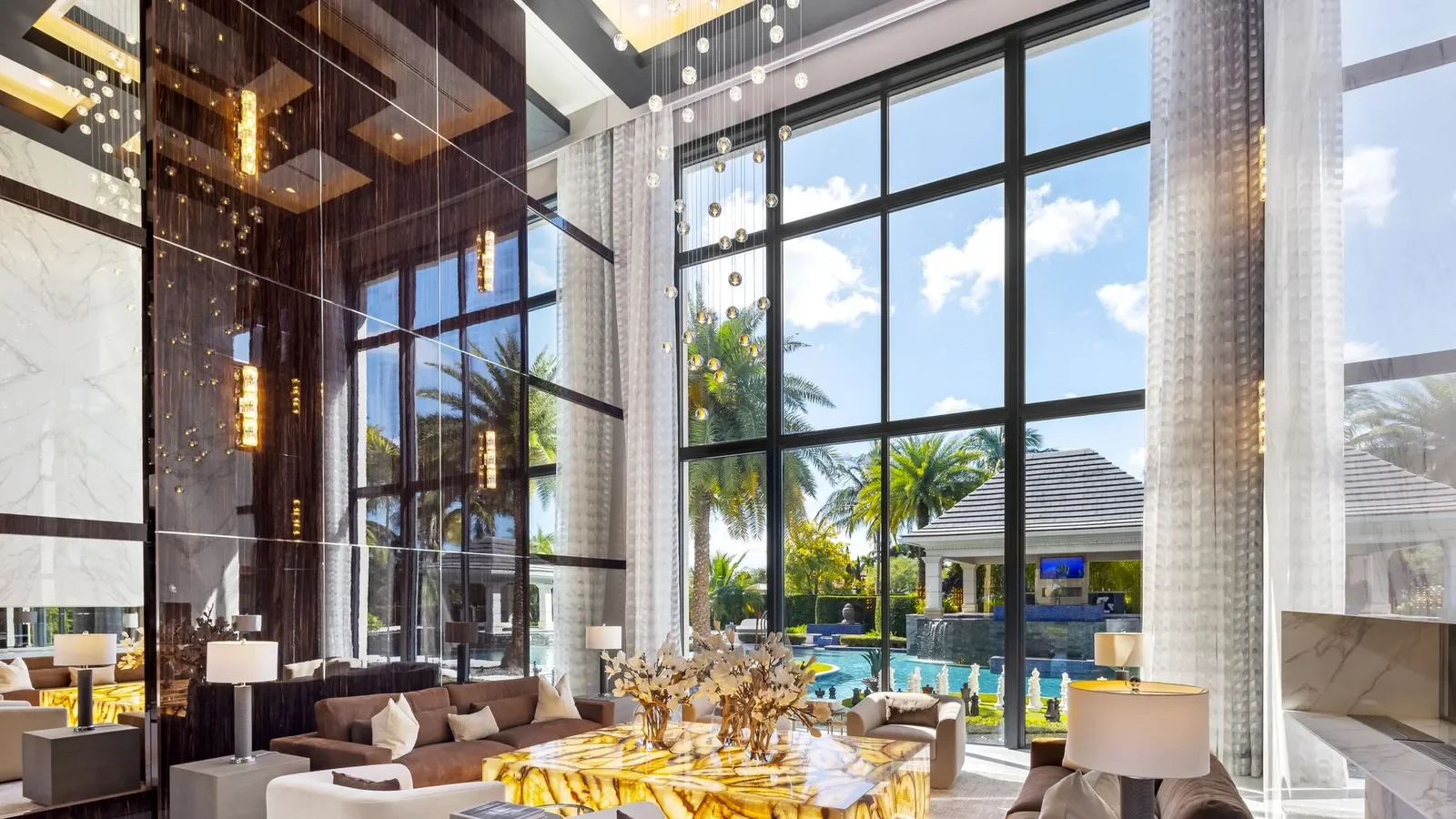
The living room in Mark Wahlberg’s new Florida home
Photo: Daniel Petroni
Jake Paul — $39 Million
In a move that underscores the appeal of land over traditional luxury residences, YouTuber and professional boxer Jake Paul acquired a massive ranch in Georgia for $39 million. Spanning more than 5,600 acres, the property includes multiple homes and extensive recreational infrastructure.
Rather than focusing on square footage alone, the purchase highlights a broader shift toward lifestyle-driven acquisitions, with buyers prioritizing flexibility, privacy, and multi-use land over conventional trophy homes.
Robbie Williams — $40 Million
British pop star Robbie Williams entered the Miami market with a $40 million waterfront purchase, acquiring a modern residence on a one-acre lot. The nearly 20,000-square-foot home offers extensive amenities, including large-scale garages, spa-style features, and outdoor entertaining spaces.
Notably, Williams reportedly plans to expand the estate further, reflecting a trend among affluent buyers to customize existing luxury properties rather than build from scratch.
The Weeknd — $50 Million
Singer and actor Abel Tesfaye, known professionally as The Weeknd, made a significant Florida investment with a $50 million purchase in Coral Gables. The Mediterranean-style estate spans nearly 19,000 square feet and sits on over an acre of waterfront land.
The transaction reflects continued demand for premium waterfront properties in tax-advantaged states, particularly among buyers seeking both lifestyle benefits and long-term asset stability.
George Lucas — $52.3 Million
Filmmaker George Lucas quietly expanded his international footprint with an off-market $52.3 million acquisition in London’s St. John’s Wood neighborhood. While details remain private, the purchase underscores the continued appeal of globally significant cities for legacy buyers seeking discretion and cultural cachet.
Adam Levine and Behati Prinsloo — $60 Million (Sale)
In one of the year’s most notable sales, Adam Levine and Behati Prinsloo sold their Montecito estate for $60 million. The Georgian-style property, originally developed for Rob Lowe, had been extensively renovated during their ownership.
The transaction highlights sustained demand in elite California enclaves, even as overall luxury pricing shows signs of moderation. Well-located, architecturally significant estates continue to command premium values.
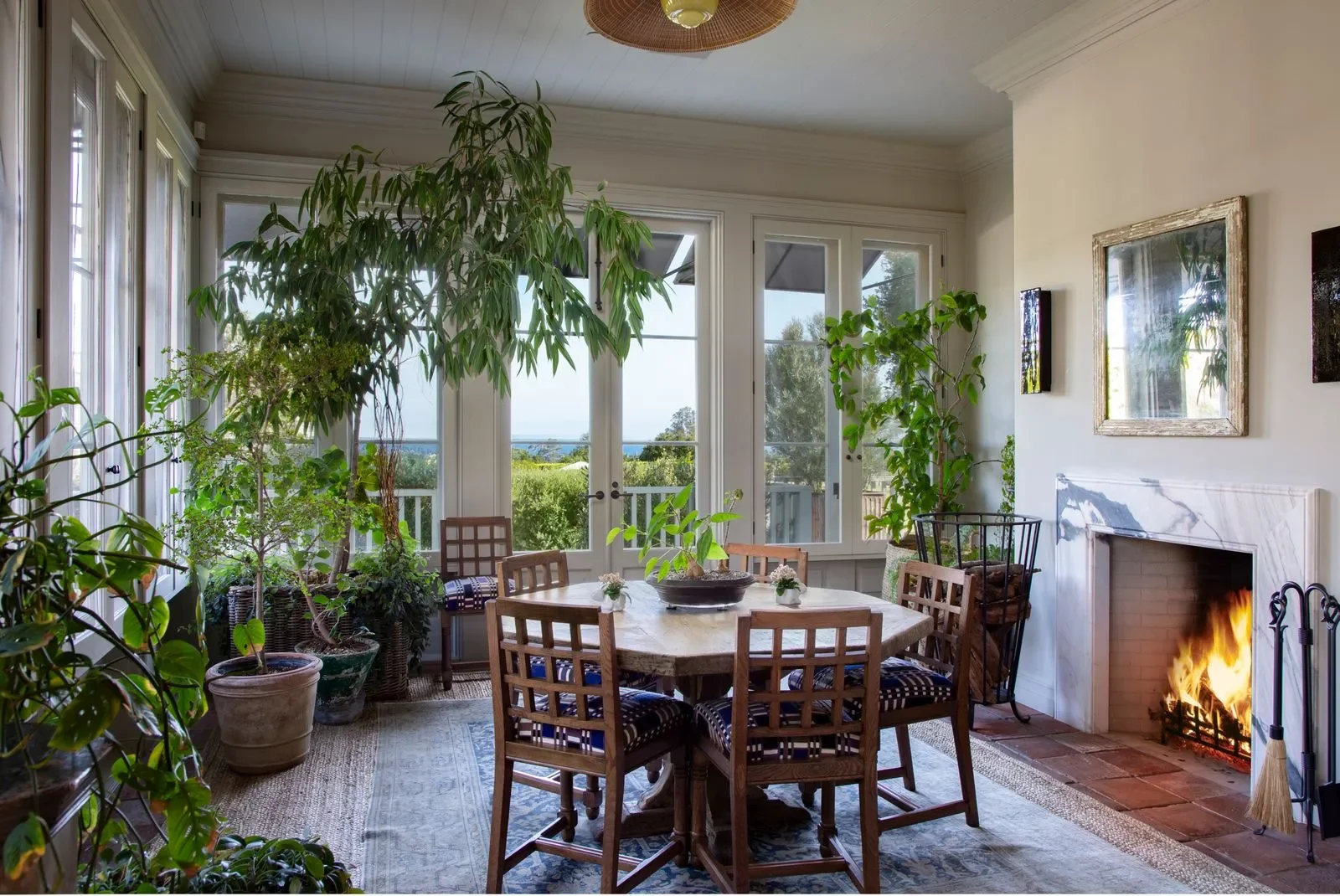
The sunroom in Adam Levine and Behati Prinsloo’s former home
Photo: Jason Rick
Jeff Bezos — $63 Million (Sale)
Jeff Bezos set a state record with the $63 million sale of his Seattle-area waterfront mansion, marking the most expensive residential transaction ever recorded in Washington state. Purchased several years earlier for significantly less, the sale illustrates how scarcity and waterfront positioning continue to drive exceptional appreciation in select markets.
Paris Hilton — $63.1 Million
Paris Hilton re-entered the Los Angeles luxury market with a $63.1 million purchase in Beverly Park, acquiring a custom-built estate previously owned by Mark Wahlberg. Set on six acres, the expansive property includes resort-style amenities, recreational facilities, and substantial privacy.
The transaction reflects ongoing demand for gated, amenity-rich estates among buyers seeking security and seclusion within major metropolitan areas.
Mark Zuckerberg — $65 Million
Meta founder Mark Zuckerberg continued expanding his Hawaiian holdings with the acquisition of approximately 1,000 additional acres on Kauai for an estimated $65 million. His total landholdings in the area now exceed 2,300 acres, reinforcing a growing trend among ultra-wealthy buyers toward large-scale, long-term land investments.
Byron Allen — $82.5 Million
The largest celebrity real estate transaction of 2025 belonged to media executive Byron Allen, who sold a full-floor condominium at 220 Central Park South for $82.5 million in an off-market deal. Purchased just two years earlier for $75 million, the sale generated a notable profit and capped the year’s pricing at a level well below recent peaks.
The transaction signals that while demand for premier addresses remains strong, pricing discipline has returned even at the highest end of the market.
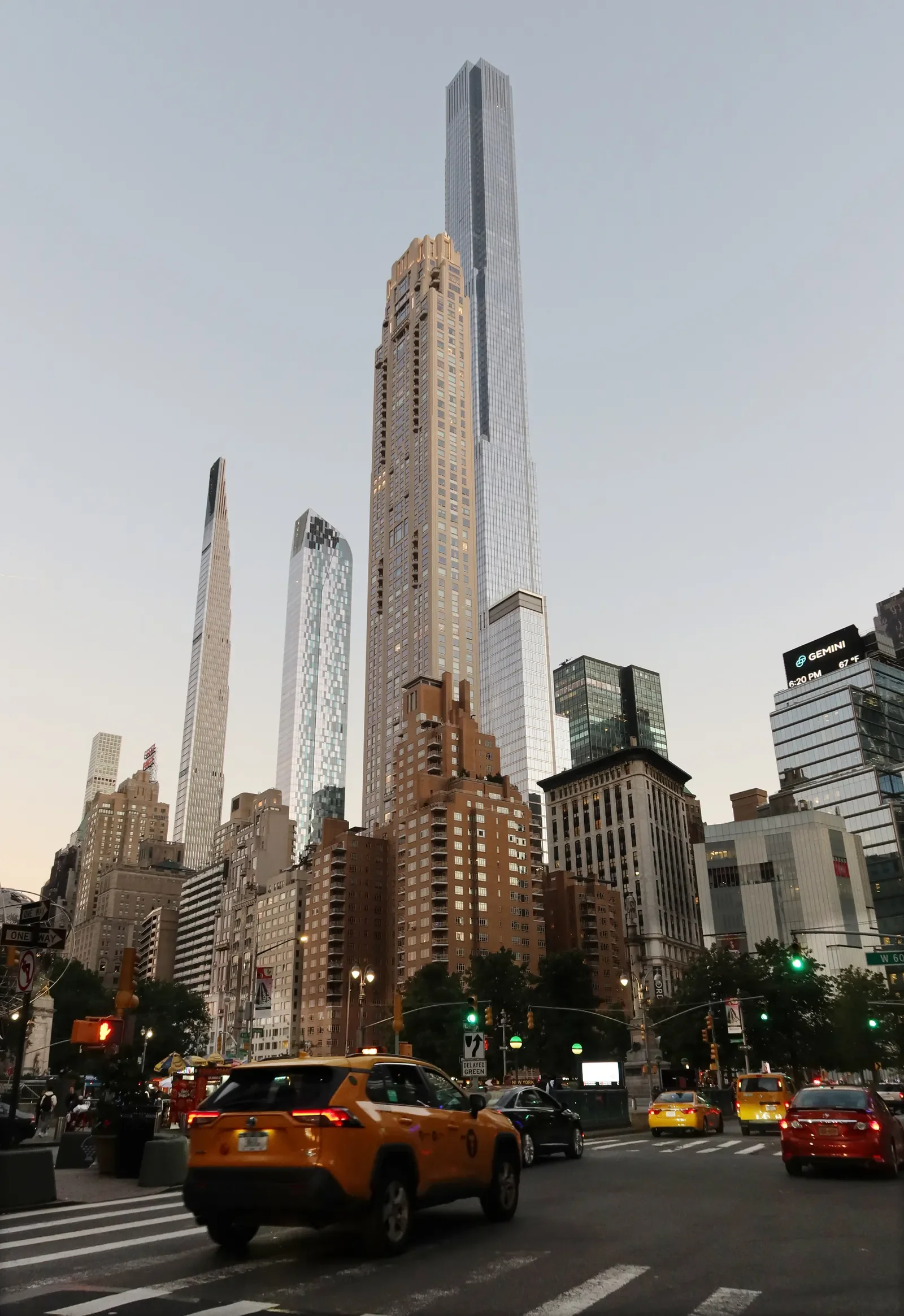
What 2025 Reveals About the Ultra-Luxury Market
Rather than signaling a downturn, 2025’s celebrity real estate activity suggests a market in transition. Luxury buyers remain active, but they are more selective, more strategic, and less focused on setting records. Land, privacy, usability, and long-term value have taken precedence over sheer price.
For luxury real estate markets worldwide—from coastal California to Hawaii and global capitals—2025 may be remembered not as a slowdown, but as a year of recalibration.


